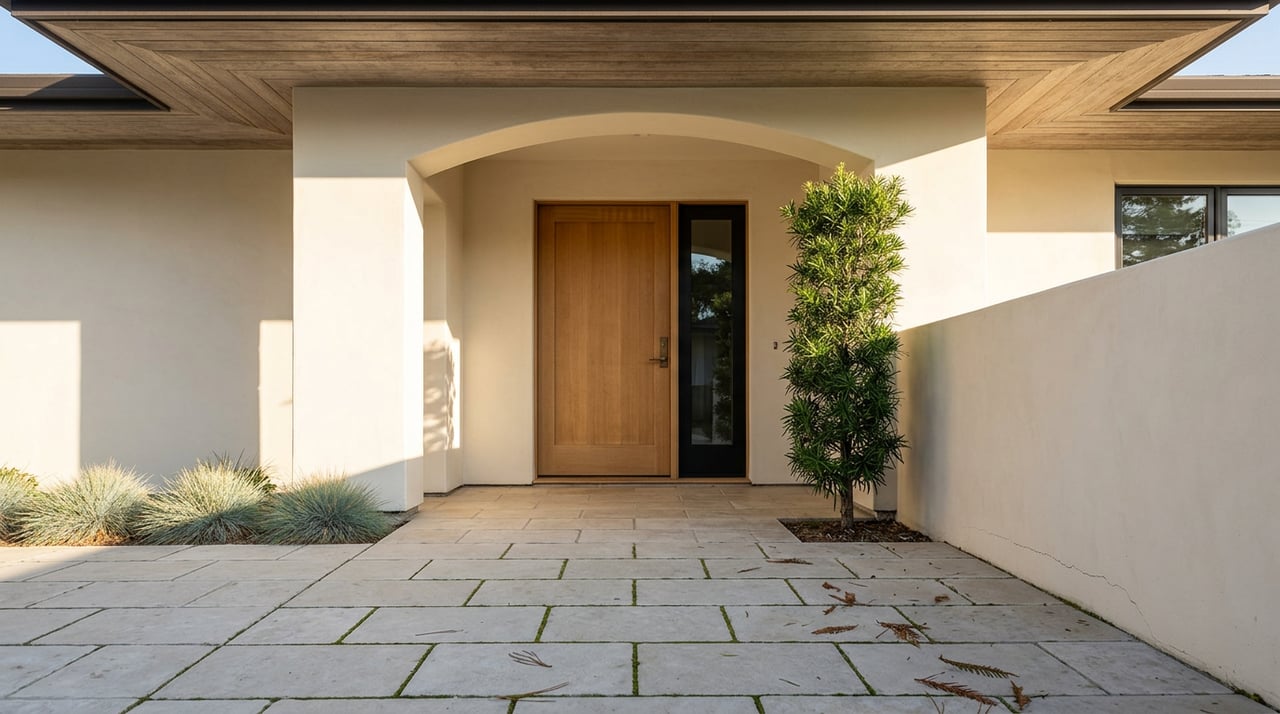
Two homes on Galloway Drive in Santa Clarita look, on paper, like the same purchase. Similar square footage, similar lot, same street, same city. Pull the county tax record on one and there is no Mello-Roos assessment at all. Pull the record on the neighbor's parcel and there is. Buyers who assumed the street decided the answer have been wrong before, and sellers who assume the same thing are the ones who end up renegotiating in escrow instead of at the listing table.
That is the part of Mello-Roos most guides skip. The tax is real, it is disclosed by law, and it is not assigned by neighborhood reputation. It is assigned parcel by parcel, tract by tract, based on how a specific builder financed a specific phase of construction. Two homes that look identical on a drive-by can carry two very different annual obligations, and the only way to know which one you have is to pull the actual bill.
Why the Same Street Can Have Two Different Tax Bills
Mello-Roos exists because of a financing gap. When Proposition 13 capped how fast California property taxes could rise, cities and developers lost a fast way to pay for the schools, roads, and parks a new subdivision needs on day one. The 1982 Mello-Roos Community Facilities Act gave them a workaround: form a Community Facilities District, issue bonds against future tax revenue, and spread the repayment across the homeowners who benefit from those improvements. Newhall Land, FivePoint, and the early Stevenson Ranch developers used exactly this tool to keep sticker prices competitive with the rest of Los Angeles County while still building out the infrastructure buyers expect.
The tax is tied to the parcel, not the person, and it runs with the property when it sells. But because each CFD was formed for a specific phase of a specific development, not for an entire neighborhood, the boundary lines rarely match what a buyer would guess from curb appeal. There is a rough rule of thumb: Santa Clarita's Mello-Roos bonds did not begin until the mid-1980s, so homes built before that generally carry none. But rough rules are exactly the trap. Within newer tracts, some parcels sit inside a CFD boundary and the house next door does not, which is precisely what county records show on Galloway Drive.
Where the Valley's 14 Districts Actually Sit
As of 2026, Santa Clarita Valley has roughly 14 active Community Facilities Districts. They are not spread evenly across the map.
| Generally carries Mello-Roos | Generally does not |
|---|---|
| Valencia (FivePoint, West Creek, Tesoro Highlands, Tesoro Del Valle) | Older sections of Valencia |
| Skyline Ranch | Saugus |
| Parts of Plum Canyon | Canyon Country |
| Most of Stevenson Ranch | Central Newhall |
Even inside the left column, the dollar amounts vary more than most sellers expect. Public tax records pulled by local agents show a Santa Clarita parcel on Linda Lane carrying two separate Mello-Roos assessments totaling $8,364 a year, while a home on Leighton Lane in the same city carries a single assessment of $2,507. A parcel on Via Sonata Drive in Valencia comes in around $3,200 annually. None of these numbers would surprise anyone once they are looking at the actual bill. All of them would surprise a buyer who only saw the monthly payment estimate on a listing sheet.
That range matters for how you price and market a home, not just how a buyer budgets. A $3,000 annual assessment is a fixed dollar figure, not a percentage of value, so it lands proportionally harder on a lower-priced home than a higher-priced one in the same district. If your home carries the higher end of that range and a comparable listing across the street carries little or none, pricing the two identically invites a renegotiation the moment the buyer's lender runs the numbers.
Why This Becomes a Seller's Problem, Not Just a Buyer's Surprise
Lenders count Mello-Roos in a buyer's debt-to-income ratio the same way they count a mortgage payment. A $3,000 to $6,000 annual assessment can measurably shrink what a buyer qualifies to offer, which means the number is not a footnote for someone shopping near the top of their budget. It is the difference between an offer that clears underwriting and one that does not.
Santa Clarita's resale market in the three months ending May 2026 has been running close to balanced, with homes typically taking somewhere in the 45-to-53-day range to sell and prices roughly flat to slightly softer than the same period a year earlier. In a market with that much room for buyers to keep shopping, a seller does not have the leverage to absorb a late-escrow surprise the way a seller might in a tighter, faster-moving year. If a buyer's agent discovers the CFD figure for the first time during the disclosure period, after the buyer has already toured, fallen for the layout, and mentally moved in, the conversation that follows is rarely calm. It is usually a request for a credit, a price reduction, or in the worst case a buyer who walks.
The fix is not complicated. It is just rarely done early enough.
Before You List: What Five Minutes of Verification Actually Confirms
- Pull your current Los Angeles County property tax bill and look for a line item labeled Mello-Roos, CFD, or Special Tax. If nothing appears, that is your answer for the current year.
- Ask your escrow or title company for the preliminary title report, which will show any recorded special assessment liens tied to the parcel.
- Locate or request the original Notice of Special Tax, the document California law requires be disclosed to buyers, which states the current annual amount, the maximum the district is authorized to levy, and when the obligation ends.
- Confirm whether the assessment is fixed or includes an annual escalator, since many CFDs allow a set percentage increase each year.
- Note the bond's remaining term. Most Santa Clarita CFDs run 25 to 40 years from issuance, and communities built in the late 1990s will generally see their original assessments roll off sometime between 2030 and 2045.
Handing a buyer's agent this information upfront, before an offer is even written, removes the single most common reason a Santa Clarita deal gets renegotiated in the middle of escrow.
The Prepayment Option Nobody Asks About
Some CFDs allow a homeowner to pay off the remaining bond balance in a lump sum and remove the annual assessment entirely. Depending on how much term is left, that payoff can run anywhere from roughly $20,000 to $50,000 or more. It rarely makes sense for a seller planning to list within the next year or two, since the buyer inherits the benefit either way. But for an owner weighing a longer hold, or an investor underwriting a multi-unit property's full carrying cost before a refinance, it is worth a phone call to the district administrator to get an exact number rather than assuming the assessment is permanent.
A Few Questions Worth Settling Before You Price the Home
Does Mello-Roos ever expire? Yes. Once the bonds that funded the original infrastructure are retired, the assessment drops off the tax bill. Most Santa Clarita districts are structured for 25 to 40 years from issuance, so the exact year depends entirely on when your specific CFD was formed.
Is any part of it tax deductible? Sometimes, and only partially. The portion of the assessment that repays bonded debt for capital improvements may qualify, while the portion that funds ongoing services like police or fire generally does not. The split varies by district, so this is a question for a CPA reviewing your specific CFD documents, not something to assume from a general guide.
Does having Mello-Roos hurt what a home sells for? Not automatically. Homes with Mello-Roos are frequently in newer communities with amenities buyers are actively seeking. But an unusually high assessment relative to a comparable home without one can narrow your buyer pool or require a pricing conversation, which is exactly why knowing the number before you list matters more than knowing it exists.
Getting the Number Right Before It Becomes a Problem
None of this is a reason to avoid a CFD community or to panic about a number that turns out to be modest. It is a reason to treat verification as step one of preparing a Santa Clarita listing, not a detail that surfaces on its own during disclosure. A seller who already has the Notice of Special Tax, the current bill, and the remaining term in hand walks into pricing conversations with facts instead of guesses, and gives a buyer's agent nothing to renegotiate around later.
If you are weighing when to list a Santa Clarita home, or comparing what a property in a CFD community will actually cost a buyer against one that has none, Montemayor & Associates can pull the parcel-specific numbers and walk through what they mean for your pricing and timeline. Contact us to get a clear picture before you go to market.